

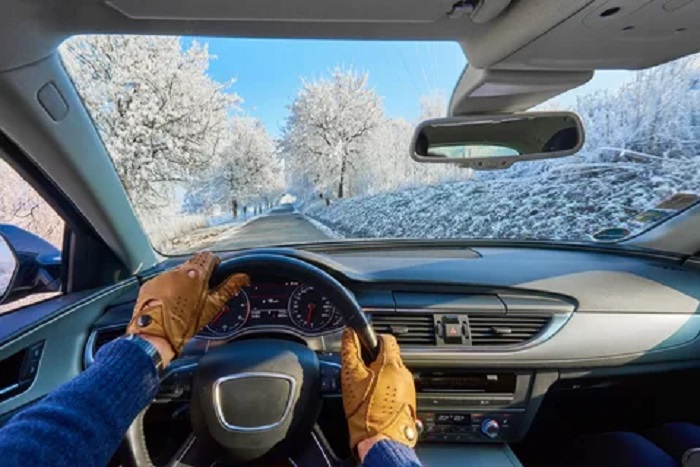
A clear morning in Zagreb says little about the roads two hours away. The city can be dry while snow covers the route towards Plitvice Lakes, fog reduces visibility in Gorski Kotar or wind restrictions affect the journey to the Adriatic. This rapid change is the central fact of winter driving in Croatia.
A rental car remains one of the most practical ways to explore Croatia outside the summer season, but the driver must confirm that the vehicle is properly equipped. Winter tyres, chains, lights and roadside assistance should be checked before leaving the pickup location, not after the weather deteriorates.
Croatia’s Winter Equipment Rules
Winter equipment is compulsory on designated winter sections of Croatian public roads from 15 November until 15 April. The rule applies regardless of the weather or the immediate condition of the road. The official winter network includes more than 800 kilometres of motorway and over 1,800 kilometres of state and county roads.
Passenger vehicles up to 3.5 tonnes must use one of two permitted equipment combinations:
- Four winter tyres marked M+S, M.S., M&S or 3PMSF, fitted to all four wheels.
- Four summer tyres with at least 4 millimetres of tread, plus suitable snow chains or approved traction devices for the driven wheels.
The 3PMSF marking is the mountain and snowflake symbol found on tyres tested for winter performance. Croatian regulations also recognise the listed M+S markings, but the condition and tread of the tyre still matter.
Outside the fixed dates, vehicles must also be appropriately equipped whenever snow or ice creates winter road conditions. A driver who uses a vehicle without the required equipment can be fined EUR 130 and prevented from continuing until the vehicle complies with the rules.
Studded tyres are prohibited. If the journey crosses into Slovenia, Austria, Hungary or Bosnia and Herzegovina, check the destination country’s rules separately because the dates and accepted equipment combinations differ.
Rental Car Inspection Before Leaving Zagreb
Ask which tyres are installed before accepting the vehicle. Check the sidewall markings on all four wheels and look for cuts, visible damage or very low tread. A vehicle described as an SUV or four-wheel drive does not replace the legal requirement for suitable tyres.
If the vehicle relies on the summer tyre and chain combination, confirm that the supplied chains fit the actual tyre size. Find out which wheels are driven and ask where the instructions are kept. Chains that are the wrong size are effectively useless when the road sign requires them.
Complete the following checks at the pickup location:
- Test the dipped headlights, indicators and rear lights.
- Confirm that the windscreen washer contains winter fluid.
- Check the wipers and heating or demisting system.
- Locate the ice scraper, reflective vest and warning triangle.
- Find the spare wheel or tyre repair kit.
- Save the rental company’s roadside assistance number.
Ask whether winter equipment is included in the price and record any missing item on the handover form. The driver remains responsible for the condition of the vehicle during the rental, even when the equipment was supplied by the rental company.
Routes Where Conditions Can Change Quickly
The A6 from Zagreb to Rijeka crosses Gorski Kotar, an elevated region where fog, snow and freezing temperatures can differ sharply from conditions in the capital. A coastal forecast is not enough for this route because the most demanding section is inland.
The A1 towards Zadar and Split also passes through mountain terrain, including the Mala Kapela and Sveti Rok sections. Snow may affect the inland approach even when the Dalmatian coast is experiencing mild weather.
The D1 route towards Plitvice Lakes enters the colder Lika region. Roads around the national park can remain icy after Zagreb streets have cleared. Use main roads and avoid an unfamiliar rural shortcut simply because navigation estimates that it saves a few minutes.
Before departure, check the English-language road report published by the Croatian Automobile Club, known as HAK. It provides current information about snow, wind restrictions, road closures, queues and ferry conditions. Check it again before returning because conditions can change during a visit.
Lights, Snow Chains and Safe Winter Technique
From 1 November through 31 March, cars in Croatia must use daytime running lights or dipped headlights during daytime driving. In fog, snowfall or poor visibility, use dipped headlights and make sure the rear lights are illuminated.
Remove snow, ice and water from the windows, mirrors, lights, roof and bonnet before moving. Snow left on the roof can slide across the windscreen during braking or fall into traffic behind the vehicle.
Increase the distance from the car ahead and keep steering, acceleration and braking smooth. Avoid cruise control on snow or ice. If visibility or grip becomes poor, stop at a safe location rather than continuing only because accommodation has already been booked.
Fit snow chains when road conditions or signs require them. Follow the instructions for the specific chains, use the permitted low speed and stop after a short distance to check that they remain correctly tensioned.
When comparing vehicles through RentGo Zagreb, review the tyre type, supplied winter equipment, insurance exclusions and roadside assistance conditions for the individual offer. A compact car with suitable winter tyres is often a better choice than a larger vehicle equipped incorrectly.
Winter driving from Zagreb does not need to be difficult. Confirm the equipment before signing the handover form, use HAK rather than assumptions to judge the route and allow the weather to change the schedule. That preparation provides more security than vehicle size or four-wheel drive alone.