

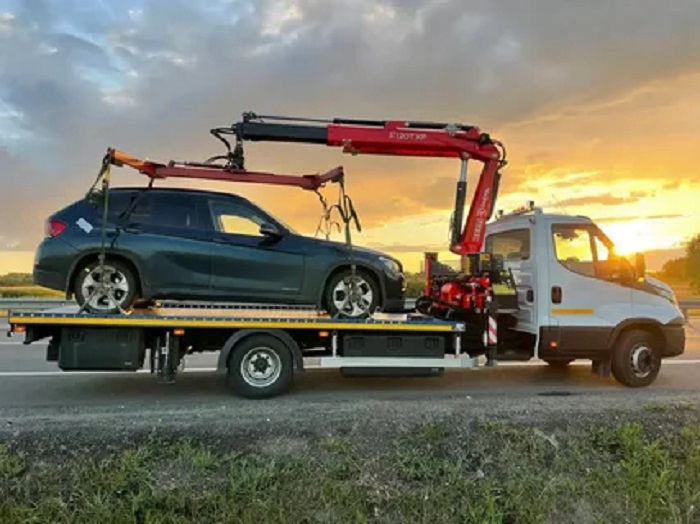
Vehicle towing is the forced removal of a vehicle to a designated parking lot or other storage location, performed by authorized services under legal grounds. The procedure is governed by administrative law and local regulations and is accompanied by mandatory documentation of the circumstances to avoid disputes and protect the owner’s rights.
Knowing the requirements for towing helps drivers quickly assess the legality of the action, properly process the vehicle’s return, and minimize costs. Below are the basic rules, typical grounds, procedures, and practical recommendations from Kitchener towing applicable in most cases.
Vehicle Towing and Storage Procedure
The towing is performed by a tow truck or other permitted means. If a vehicle can be moved without loading (for example, by partial loading), this must still comply with technical safety requirements and not cause damage.
How the towing should proceed
- Safety of operations: installation of warning devices, compliance with loading regulations, elimination of hazards to pedestrians and other road users.
- Property safety: actions that cause further damage are prohibited; all manipulations must be justified and carried out carefully.
- Information: in some cases, information about the storage location and service contact information must be available through the dispatch center, hotline, or online services.
Payment, rates, and what is included in the costs
Costs are typically made up of two parts: the cost of moving and the cost of storage. Payment terms depend on local regulations: in some places, the car is released after payment, in others after the paperwork is completed, and payment can be made later. When choosing a contractor for transportation on private property (for example, when ordered by the owner), it’s helpful to clarify the scope of services in advance – many services, including kitchener towing, operate this way.
What the owner should do: a step-by-step algorithm
If your car has been towed, it’s important to act calmly and consistently to quickly return the vehicle and, if necessary, challenge any unlawful actions.
Steps for returning the vehicle
- Check the storage location: through official services, the duty station, the dispatch center, or information on-site.
- Prepare documents: identification, vehicle registration documents; If necessary, a power of attorney.
- Obtain permission/confirmation of issuance: if a separate stamp/resolution is required in the region.
- Inspect the vehicle before leaving the parking lot: document any damage with photos/videos, and compare the condition with the documents.
- Pay for services according to the rules and receive supporting documents.
How to protect your rights during a disputed towing
If there are doubts about the legality of the towing, evidence is important: photographs of the location, signs and markings, dashcam footage, witness information, copies of orders and reports. If any procedural violations are discovered, you can file a complaint with the authorized body or go to court, as well as file a claim for compensation if there is confirmed damage and a causal relationship.
To reduce the risk of towing, check signs and plaques, observe time restrictions, do not block access roads, and do not park your vehicle in areas where it could create an obstruction. In controversial locations, it is useful to select alternative parking in advance, as the costs and time required to return the car usually significantly outweigh the convenience of a short stop.
Legal grounds for moving a car to a special parking lot: summary
Key rule: towing is legal only if there is a prescribed reason and the documents are correctly executed, and the driver retains the right to demand an explanation of the reason, receive copies of the materials, and correct the violation before the tow truck departs, if permitted in the specific situation.
What is important to check during towing
- The presence of a legal basis: violation of stopping/parking rules (including in disabled parking spaces without a license), obstructing traffic, being in prohibited areas, and other cases established by the norms of the Code of Administrative Offenses and the Traffic Regulations.
- Procedure: drawing up a protocol on the detention of a vehicle (or a corresponding procedural document) by an authorized person, recording the circumstances, indicating the location of the move, and Special parking lots.
- Identification and inventory: vehicle details, condition, visible damage, and, if necessary, a list of property and opening/sealing marks.
- Possibility of termination of detention: If the driver arrived before the start of the move and can immediately eliminate the reason for the detention, this should be reported and requested to be reflected in the materials (provided that the law allows for termination in a specific case).
- Return procedure: obtaining permission (if required), payment for moving/storage services accordance with regional regulations, the process of releasing the vehicle from the parking lot must be completed.
Bottom line: the legality of a towing operation is determined not only by the presence of a violation, but also by compliance with the established procedure. If there is no basis or the documents are not properly prepared, the actions taken to move and retain the vehicle can be appealed, and the costs incurred can be claimed for reimbursement in accordance with the established procedure.