

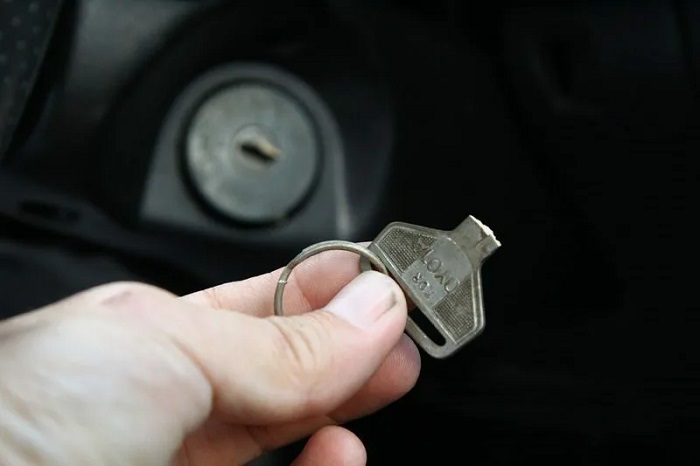
A broken key in the ignition, door, or trunk is an unpleasant situation that can occur due to metal wear, a warped key cylinder, a frozen mechanism, or improper turning force.
The main thing is to avoid forcing the broken key out or pouring inappropriate liquids into it: this often leads to the cylinder jamming, damaged pins, and increased repair costs. See more details on the website.
First Steps: Assessing the Situation and Safety
First, determine where exactly the key broke: in the door, in the ignition, in the trunk, or in the fuel filler cap. This determines whether you can continue driving and what measures are permissible.
- If the key broke in the ignition and the car won’t start, turn on the hazard warning lights, check whether you are obstructing traffic, and put out the emergency stop sign if necessary.
- If the key broke in the door, try to enter the car with a spare key, through another door, or using the factory key fob (if it has a separate one).
- If the key broke in the trunk, check that there is no access from the car (folding seats, emergency release cable).
What you definitely shouldn’t do
- Don’t try to turn the broken key with pliers if it is deeply seated: it is easy to break the cylinder or twist the internal components.
- Don’t hammer screws, nails, or pry into the key with a screwdriver: you will damage the pins. Springs and lock housing.
- Do not pour oil, brake fluid, or anything else you have on hand inside the lock: this collects dirt and impairs the mechanism’s operation.
How to protect your car and yourself immediately after a broken key
Immediately after a broken key, it is important to act in a way that does not further damage the lock or create safety risks: do not use force, do not attempt to turn the cylinder with tools, and do not leave the vehicle unattended.
Priority is personal safety and the safety of the vehicle: assess the location (lighting, traffic flow, risk of theft), move to a safe area if necessary, and arrange for assistance without hasty action.
- Stop attempting to turn the lock if part of the key is stuck: this may jam the cylinder and make it more difficult to remove.
- Stop the vehicle: put it in “P” (automatic transmission) or Shift into gear (manual transmission), apply the handbrake, and straighten the wheels if possible.
- Ensure visibility and safety: turn on the hazard warning lights, put out the emergency stop sign, and do not stand in the roadway.
- Do not leave the car unlocked: close the doors and windows, remove any valuables from the vehicle, and stay nearby until help arrives.
- Check for a spare key and access to the app/key fob (if equipped): sometimes it is safe to end the trip or lock the car without opening it.
- Prepare documents and information for the mechanic/service: make, model, year, lock/ignition type, VIN (if necessary), and your vehicle registration documents.
- Call for specialized assistance: an auto electrician/locksmith, a dealer, or a tow truck – depending on where the key broke (door, ignition, trunk) and whether it is safe to continue driving. Movement.
- Keep your phone charged and let your loved ones know your location, especially if the situation occurs at night or away from crowded areas.
- If you see signs of a break-in or a conflict, do not interfere. Move to a safe place and call emergency services if necessary.
The bottom line: the main task after a broken key is to avoid making the damage worse and putting yourself and the car at risk. Calmly secure the car, ensure road safety, restrict access to the interior, and call in specialists—this is faster and cheaper than the consequences of forceful attempts to open or start the car.